
Dementia and Alzheimer’s Disease
Both dementia and Alzheimer’s Disease (AD) profoundly impact individuals and their families. Dementia is a cognitive decline affecting memory, thinking, and daily functioning. AD is the most common cause of dementia.
What is Dementia?
Dementia is a term used to describe a decline in cognitive function that affects a person’s ability to perform everyday activities. It is a group of symptoms that can be caused by a variety of underlying conditions, including Alzheimer’s disease, Parkinson’s disease, Huntington’s disease, and others.
The symptoms of dementia may include:
- Memory loss
- Difficulty communicating or finding words
- Difficulty with complex tasks
- Poor judgment
- Personality changes and
- Problems with spatial awareness and orientation
These symptoms can be gradual or sudden, and they may worsen
over time.
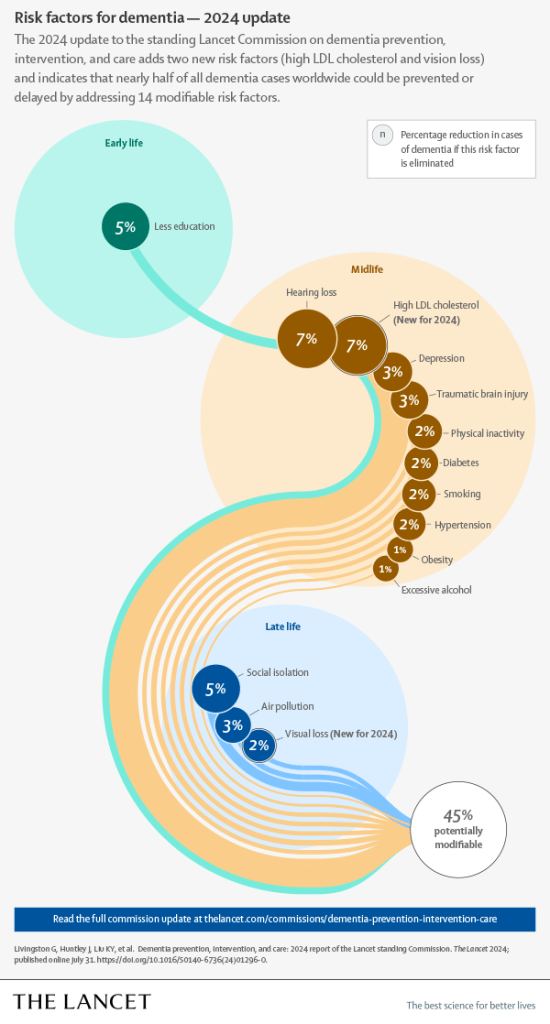
Dementia can be caused by a range of factors, including brain injury, infections, genetic factors, and lifestyle choices. However, up to 45% of the risks identified for dementia are modifiable with lifestyle changes.
What is Alzheimer’s Disease (AD)?
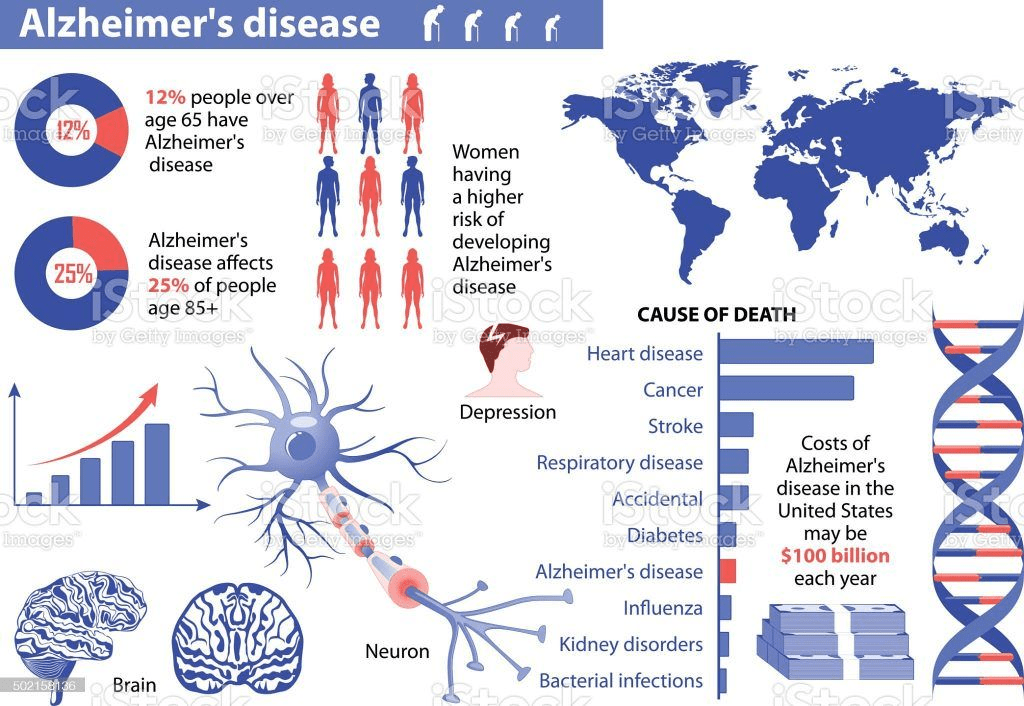
Alzheimer’s disease is a type of dementia. AD is a progressive neurological disorder that affects the brain and leads to memory loss, cognitive decline, and changes in behavior and personality.
It is the most common form of dementia, accounting for 60-80% of all cases, and typically affects people over the age of 65, although early-onset Alzheimer’s can occur in people as young as their 40s or 50s.
The hallmark features of Alzheimer’s disease are the accumulation of abnormal proteins in the brain, including beta-amyloid plaques and tau tangles, which interfere with normal brain function and eventually lead to the death of brain cells.
What Causes Alzheimer’s Disease?
The exact causes of Alzheimer’s disease are not fully understood, but researchers believe that a combination of factors may contribute to the development of the disease. Factors that may increase the chances of developing AD include:

Environmental factors
Exposure to certain
environmental toxins,
such as lead or aluminum.

Lifestyle factors
Poor diet, lack of exercise,
smoking, and
excessive alcohol consumption

Other medical conditions
Certain medical conditions,
such as high blood pressure,
high cholesterol, and diabetes
Genetics
Certain genetic mutations, also called genetic variants,
are known to increase the risk of developing
Alzheimer’s disease. These include mutations in
the APP, PSEN1, and PSEN2 genes. However,
these mutations are relatively rare and account for
only a small percentage of all cases of Alzheimer’s disease.

Age
Alzheimer’s disease is more common in older adults,
and the risk of developing the disease increases with age.
This is thought to be due in part to the
accumulation of abnormal proteins
in the brain over time.
It is important to note that while these factors may increase the risk of developing Alzheimer’s disease, they do not guarantee that someone will develop the disease. More research is needed to better understand the genetic and environmental factors that contribute to Alzheimer’s disease.
Early-Onset AD vs Late-Onset AD
There are two types of AD, early and late-onset. Early (also known as younger-onset AD) and late-onset AD have similar symptoms and mainly differ based on when AD symptoms being, how fast the symptoms come on, and how fast the disease progresses. Early-onset AD accounts for about 5-10% of all AD cases, while late-onset AD accounts for the remaining 90% of cases.
Early-onset Alzheimer’s disease can be caused by genetic mutations that are passed down through families, as well as by other factors such as head injury, infections, and exposure to environmental toxins. Since early-onset AD has known genetic mutations associated with it, and genetic testing can help to identify individuals who may be at risk for early-onset Alzheimer’s disease.
Late-onset Alzheimer’s disease is believed to be caused by a combination of genetic, environmental, and lifestyle factors, including age, family history, head injury, high blood pressure, and high cholesterol.
| Early-Onset AD | Late-Onset AD | |
| Frequency | 5-10% of all AD cases | 90% of all AD cases |
| Age of Onset | Under 65 years of age | Generally, over the age of 65, but can occur in younger individuals |
| Symptoms | Memory loss Difficulty with language Problems with spatial orientation Changes in mood and behavior Difficulty with complex tasks Rapid on-set of symptoms Disease progression may progress quicker | Memory loss Difficulty with language Problems with spatial orientation Changes in mood and behavior Difficulty with complex tasks Gradual on-set of symptoms Disease progression may progress slower |
| Causes | Genetic mutations Head injury Infections Exposure to environmental factors | A combination of genetics, environment and lifestyle |
Is There a Cure for Dementia or AD?
There is currently no cure for dementia or AD, but there are treatments and interventions that can help to manage symptoms and improve quality of life for people with the condition. These may include medications, lifestyle changes, and support from caregivers and healthcare professionals.
Treatment options for AD are currently limited to medications that can temporarily alleviate symptoms or slow the progression of the disease. Lifestyle changes, such as a healthy diet and regular exercise, may help to reduce the risk of developing the disease or slow its progression. Research is ongoing to better understand the underlying causes of Alzheimer’s disease and to develop more effective treatments and preventions.